
Prosecutors say Harvey Weinstein tried to spend $1.75 million to shape a jury with timed podcast videos, and now a famous host is back in the spotlight for it.
Story Snapshot
- Prosecutors alleged Weinstein plotted to “taint the jury pool” with scheduled videos.
- The claim came in open court during Weinstein’s New York sentencing.
- Coverage cited recorded jail calls as the basis for the allegation.
- The podcaster was not named publicly, fueling intense speculation.
What Prosecutors Put On The Record
Manhattan prosecutors told the court that Weinstein negotiated a $1.75 million payment tied to helping podcasters time videos to aid his defense and “taint the jury pool”. The statement landed in a sentencing hearing, not a leak or rumor. That matters. A courtroom claim creates a public record with stakes. Reports say the state pointed to recorded jail calls. The described plan hinged on when videos would post, not just what they said.
Coverage is not uniform on the dollar figure. Some reports frame it as “more than $1 million,” while others print $1.75 million. That gap suggests details may tighten once transcripts and filings are widely available. The core is steady across outlets: prosecutors alleged a planned spend and a schedule to influence potential jurors before and around trial windows. No one has shown the public the audio or full transcripts of those calls yet.
The Podcaster Question And The Speculation Trap
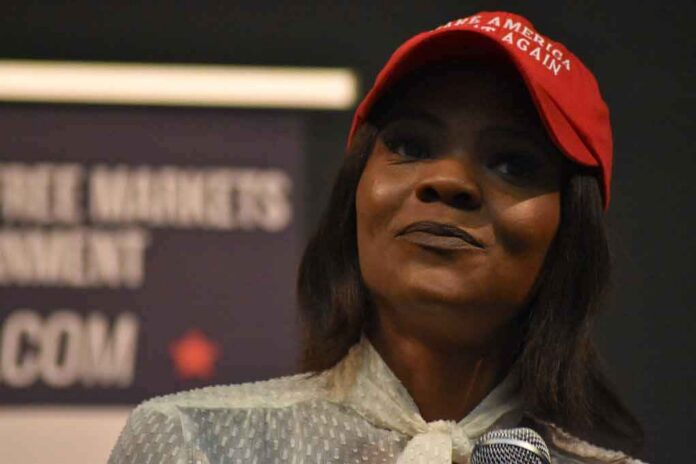
The state did not name the podcaster in court, which left a vacuum that pundits rushed to fill. Commentators linked the claim to Candace Owens because she ran a high-profile series and an interview with Weinstein in 2025, promoted for subscribers first and then more broadly. That linkage is commentary, not court proof. The record shows Owens published Weinstein content and framed it as newsmaking and subscriber-worthy. That alone does not answer who was offered money or who accepted any offer.
Conservative readers should demand receipts, not rumors. If prosecutors have jail calls and documentation, the clean path is simple: release transcripts, exhibits, and any financial trails. If critics claim the target was a specific host, they should show contracts, wires, or messages with clear terms. Until then, the clean line is this: the allegation exists in court; the recipient remains unnamed in that setting.
What Owens Published And Why It Matters To The Timeline
Owens platformed Weinstein content across 2025. She teased a prison phone call. She hosted an on-camera interview billed as his first in eight years. She offered early access to paying subscribers and rolled out clips later to wider audiences. That activity shows clear editorial planning and marketing. It also shows why speculation focuses on her: visibility, volume, and timing. Yet visibility is not evidence of payment or of a schedule dictated by Weinstein’s legal strategy.
Weinstein used that airtime to push his claims of innocence and to reframe known settlements, including a payment to Rose McGowan that he described as a settlement without wrongdoing. For a jury-pool theory, this content would be relevant if releases lined up to court milestones where jurors or their networks might see them. Proving that demands more than headlines; it needs platform logs, upload stamps, and coordination records.
The Real Stakes: Can Media Bend A Jury?
Research on pretrial publicity says exposure can sway jurors, even when judges warn them to ignore it. Meta-analyses and legal scholarship find small but real effects on verdict lean and how evidence feels to a layperson. Courts try to filter this with voir dire, instructions, and sometimes sequestering. Those tools help, but they cannot un-see a viral clip. A well-timed series can drip ideas into the local hive mind and make neutrality harder to find.
Good Grief, Harvey Weinstein Offered Candace Owens $1.75 Million to Assist His Legal Effort?!
NYP – […] Prosecutors alleged during the hearing that they had recordings of Weinstein offering a podcaster $1.75 million in a jailhouse phone call to release videos to help his… pic.twitter.com/HUT1lSHNha
— Pete Santilli 🇺🇸 🇮🇹 🎙️ (@petersantilli) September 24, 2026
Here is the conservative common-sense test. Free speech is not a crime. Interviews with unpopular figures happen every day. But if a defendant funds a release plan to steer a jury, that crosses a bright line. The solution is not speech crackdowns; it is sunlight. Publish the jail-call transcripts. Show the money trail. Map the release calendar to trial events. If the facts match the claim, accountability follows. If not, then end the whisper campaign and move on.
Sources:
theconservativetreehouse.com, yahoo.com, ndtvprofit.com, theguardian.com, images.law.com
© conservativehub.com 2026. All rights reserved.