

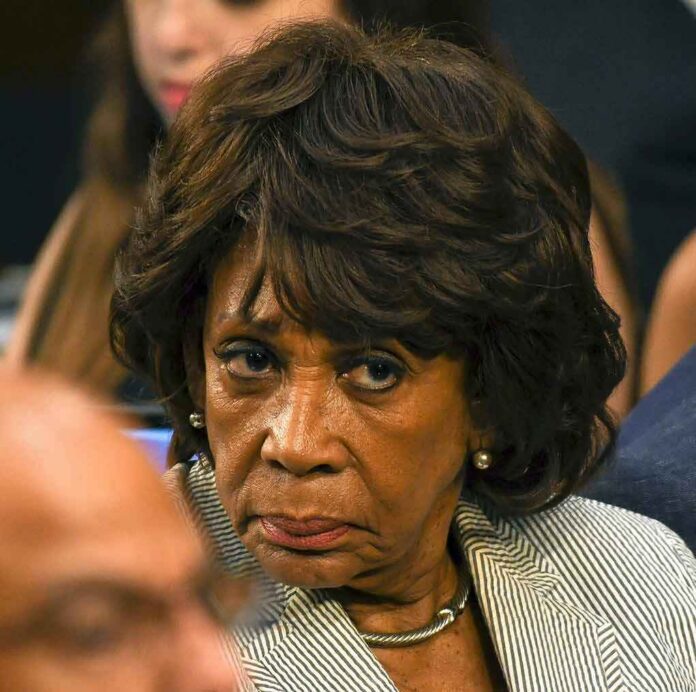
Maxine Waters says white reporters are stirring up a Democrat civil war just to grab better ratings.
Quick Take
- Representative Maxine Waters blamed the “white media” for pushing a fight between establishment Democrats and the Democratic Socialists of America.
- Waters has clashed publicly with media figures and Trump officials before, including a recent sharp exchange with Treasury Secretary Scott Bessent.
- Research on news coverage shows conflict framing is common across outlets, but studies do not find one-sided proof that it targets Democrats specifically to divide them.
- Polling shows most Americans, including many Democrats, already think media coverage worsens political division.
What Waters Actually Said About Media and Democratic Infighting
Waters told reporters the growing tension between establishment Democrats and the Democratic Socialists of America is being pushed along by what she called the “white media.” The claim, first reported by a media outlet on July 12, 2025, frames the coverage of Democratic Party splits as manufactured rather than real. She did not offer evidence that any specific network coordinated this effort.
Waters is no stranger to public friction with the press and with Trump administration officials. She has sparred with Treasury Secretary Scott Bessent over tariffs, told him to be quiet during a hearing, and criticized the Securities and Exchange Commission’s leadership under President Trump. Her combative style is well known on Capitol Hill and has made her a frequent target of Republican criticism for years.
Does the Evidence Back Up a Ratings-Driven Media Plot?
Communication researchers have studied conflict framing for decades, and the pattern is real but not new. Studies show journalists often highlight disagreement because it grabs attention and meets what they see as balanced reporting standards. One widely cited definition says conflict framing appears whenever a story shows a clear two-sided disagreement between groups, which describes plenty of ordinary political coverage, not a hidden campaign against one party.
That research also shows conflict coverage can push people to talk more about politics and stay engaged, which is one reason outlets keep returning to intraparty fights. But none of it proves editors are targeting Democrats by race of reporter or intentionally driving a wedge between socialists and party leaders. The Niskanen Center’s review of election coverage found no consistent pattern of bias favoring either party, with some studies even finding bias against Republicans.
What Democrats and Pollsters Say About Media and Division
Longtime Democratic Representative James Clyburn recently pointed to a different problem entirely. He said the party’s real messaging trouble is its own heavy reliance on the media to carry its message, not a media conspiracy to divide Democrats. That is a criticism of internal Democratic strategy, not evidence that reporters are working to split the party for profit.
Pew Research has tracked how Democrats and Republicans view the press for years. A large majority of Democrats, 82 percent in one survey, say they support the media’s watchdog role and see it as a check on power, not an enemy. Yet broader polling shows 74 percent of all Americans believe news coverage does more to increase political division than to calm it, a view shared across party lines.
Why This Argument Resonates With Some and Falls Flat for Others
Blaming “white media” for a party’s internal disputes shifts attention away from real disagreements over policy, spending, and how far left the party should move. Establishment Democrats and the Democratic Socialists of America have genuine differences on issues like government spending and foreign policy, differences that exist independent of who reports on them. Calling coverage of those differences a race-based ratings scheme dismisses legitimate reporting as bad faith.
Conservatives have long argued that Democrats reach for media blame whenever internal cracks show up in public. Waters’ comment fits that pattern closely. Reporting on a real rift inside a major political party is basic journalism, not sabotage, and treating it as a racial conspiracy risks distracting voters from the actual policy fight happening inside the Democratic coalition itself.
Whatever the motive behind the coverage, the underlying split between establishment Democrats and democratic socialists is not manufactured. It shows up in votes, in primary challenges, and in public statements from members of both camps. Reporters covering that split are describing something voters can already see for themselves, ratings or no ratings.
Sources:
analysis.limitedgov.org, congress.gov, waters.house.gov, thedailybs.com
© conservativehub.com 2026. All rights reserved.