
After forty-three days of gridlock and disruption, the government shutdown ended with Senate Democrats—led by Chuck Schumer—securing none of their demands and losing leverage, a decisive defeat for leftist obstructionism and a victory for responsible governance.
Story Snapshot
- The 2025 shutdown became the longest in U.S. history, lasting 43 days due to a standoff over healthcare subsidies.
- Chuck Schumer and Senate Democrats failed to secure an extension of Obamacare subsidies as a condition for reopening government.
- A bipartisan deal ended the shutdown, but Democrats received only a non-binding promise on future healthcare votes, angering their base.
- The outcome reinforces that shutdown tactics by the minority party rarely succeed—and left key progressive priorities unaddressed.
Democrats’ Shutdown Gambit Fails to Deliver
On October 1, 2025, a new chapter in Washington dysfunction began as Senate Democrats, under Minority Leader Chuck Schumer, refused to pass a clean funding bill, choosing instead to demand a renewal of expiring healthcare subsidies. President Trump and Senate Republicans stood firm, refusing to negotiate on these “policy riders” and insisting on legislation free from partisan strings. The impasse led to a federal shutdown that disrupted services for millions of Americans and triggered furloughs and delayed pay for federal employees.
For weeks, political theatrics dominated the headlines, with both parties blaming each other for the ongoing disruption. Schumer attempted to use the shutdown as leverage, banking on public frustration to force Republicans into concessions over healthcare. However, public sentiment grew increasingly restless, with Americans demanding a return to normalcy rather than furthering a political standoff. As the shutdown dragged into its sixth week—surpassing all previous records—pressure mounted on both sides, but especially on Democrats, whose own ranks began to fracture as moderate senators grew weary of the stalemate and crossed party lines to vote for reopening the government.
Republican Resolve and Trump’s Leadership
President Trump’s strategy throughout the shutdown was clear and uncompromising: no policy concessions, only a clean funding bill. By holding the line, he avoided the trap of past administrations that caved to partisan demands, instead restoring a focus on responsible governance. House Speaker Mike Johnson and Senate Republicans maintained party unity, bolstered by the knowledge that the public was weary of government dysfunction and eager for stability. When Democrats proposed a one-year extension of Obamacare subsidies as a compromise, Republicans rejected the offer, signaling they would not reward obstruction with legislative wins for the minority party.
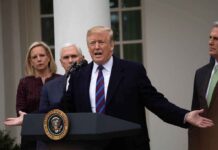
On November 12, after 43 days of gridlock, a bipartisan vote finally ended the shutdown. The agreement included only a temporary funding measure through January and a vague, non-binding commitment to consider healthcare subsidies in the future—far from the concrete policy victory Schumer had promised his base. At the signing event, President Trump openly blamed Democrats for the shutdown and emphasized the importance of prioritizing essential government functions over political gamesmanship.
Consequences: Political Fallout and Eroded Leverage
For Democrats, the outcome was a political embarrassment. Schumer’s inability to extract meaningful concessions led to sharp criticism from progressives, who accused their leadership of capitulating without results. The episode underscored the inherent risks of using government shutdowns as a negotiating tactic—especially for the minority party, whose leverage is limited by numbers and public patience. Analysts widely agree that this approach rarely yields lasting policy victories and often backfires, as demonstrated by the erosion of Democratic credibility in this latest showdown.
Chuck Schumer lost the government shutdown https://t.co/A3GyFSbkJI via @dcexaminer
— Fearless45 (@Fearless45Trump) November 13, 2025
Short-term impacts of the shutdown included delayed paychecks, disrupted services, and an estimated $15 billion per week in economic losses. Longer term, the failed gambit weakened Democrats’ position in future negotiations and left key progressive priorities unresolved. For conservatives, this outcome validated a commitment to stand firm against obstruction, fiscal recklessness, and attempts to shoehorn divisive agendas into must-pass legislation. The 2025 shutdown stands as a cautionary tale about the dangers of brinkmanship and the importance of constitutional, responsible governance.
Expert Reactions and Lessons for the Future
Political analysts and economists have reached a consensus: government shutdowns inflict real economic and social harm, with little to show in terms of substantive policy gains for the instigators. The 2025 episode reinforced the lesson that the Constitution’s checks and balances require principled negotiation, not hostage-taking. For conservatives, the outcome showcased the value of unity and resolve in defending American priorities—individual liberty, limited government, and the protection of constitutional order—against the recurring threat of partisan overreach. With government services restored and no binding commitment to leftist priorities, the nation can move forward, learning from the failures of divisive tactics and reaffirming the importance of common-sense leadership.
Sources:
Government shutdown vote ends after record 43 days, Democrats fail to secure healthcare deal
White House: Government shutdown clock and impacts
The longest US federal government shutdown in history has ended: Elected officials react
Obamacare punt: Democrats propose compromise as shutdown drags on
CBS News: Government shutdown sets record, ends without major Democratic wins