America is sending $330 million in military parts to Taiwan—Trump’s first such sale since retaking the White House, signaling renewed U.S. resolve against growing threats from communist China.
Story Snapshot
- The Trump administration approved its first major arms sale to Taiwan since returning to office, totaling $330 million in military parts and equipment.
- This move underscores a shift from the previous administration’s uncertain foreign policy, reinforcing U.S. commitments to allies and deterring Chinese aggression.
- Trump’s foreign policy stands in stark contrast to Biden-era globalism, emphasizing American strength, sovereignty, and constitutional values.
- The decision is expected to heighten tensions with Beijing, while bolstering U.S. credibility in Asia and reassuring conservative voters of restored American leadership.
Trump’s First Major Arms Sale to Taiwan: A Strategic Signal
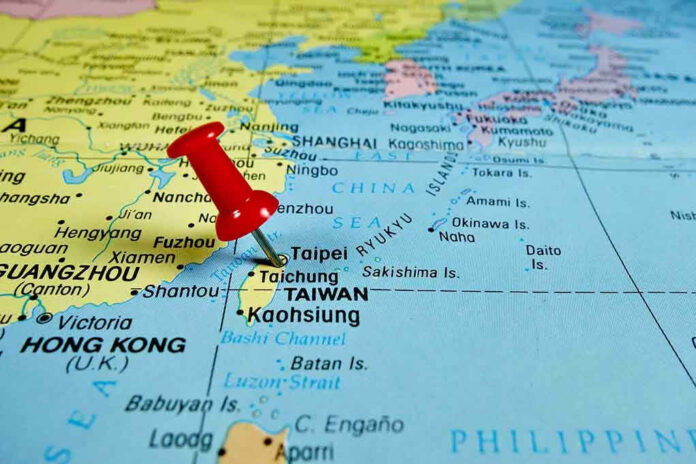
On November 14, 2025, the United States approved a $330 million military sale to Taiwan, marking the first such transaction since President Donald Trump’s return to the Oval Office. The sale, confirmed by Taiwan’s foreign ministry, includes critical parts and equipment aimed at supporting Taiwan’s defense capabilities. This decision is widely viewed as a strong message to Beijing that America is once again standing firm with its allies and is unwilling to let communist China dictate terms in the Indo-Pacific region.
Contrasting Approaches: Trump’s Assertiveness Versus Biden-Era Ambiguity
President Trump’s administration has repeatedly emphasized deterrence and strength, sharply diverging from the prior administration’s often ambiguous foreign policy. Under Biden, critics argued that America’s global posture had softened, emboldening adversaries and undercutting allies. Trump’s renewed focus on robust defense ties and clear commitments to partners like Taiwan is restoring America’s credibility abroad, demonstrating that U.S. foreign policy is once again driven by American interests and constitutional values rather than globalist appeasement.
The decision to approve this sale aligns with Trump’s broader record of prioritizing national security, economic strength, and constitutional protections. In his first six months back in office, Trump has signed landmark legislation, increased border security, and slashed unnecessary spending, signaling a return to American-first policies. The arms sale to Taiwan further cements this shift, as it not only supports a democratic partner but also helps counter Chinese expansionism, a long-standing concern among conservatives. Trump’s approach is defined by clarity and action, not bureaucratic hesitation.
Chinese Aggression and the Importance of Deterrence
Beijing has consistently ramped up military pressure on Taiwan, conducting drills and issuing threats in an attempt to undermine the island’s autonomy. By moving quickly to approve the arms sale, the Trump administration is making it clear that American support for Taiwan is not negotiable. This action deters further Chinese aggression and reassures both the American public and U.S. allies that American leadership is back on the world stage, defending freedom rather than caving to foreign bullies.
Conservative voters have frequently voiced concerns about the erosion of American sovereignty and the threat posed by authoritarian regimes. The $330 million deal is not just about hardware—it is a declaration that America will not retreat from its responsibilities or abandon core principles such as self-defense, national security, and support for democratic partners. The move is a sharp rebuke to globalist trends and a reaffirmation of constitutional values.
Restoring American Leadership: Conservative Values in Action
The arms sale comes on the heels of other decisive actions from the Trump administration, including historic tax cuts, border enforcement, and the rollback of Biden-era leftist policies. Trump’s administration has also overseen record-low inflation, renewed economic growth, and a strong stock market—clear signals that conservative governance produces results. By standing with Taiwan, the President is not only safeguarding a key ally, but also upholding the kind of principled, America-first foreign policy that resonates with voters who are tired of weakness, waste, and woke overreach.
While tensions with China are likely to increase, the Trump administration’s decision reflects its commitment to security, sovereignty, and constitutional values. Americans concerned about the erosion of their freedoms and the dangers of globalism have reason to be reassured: the United States is once again projecting strength, defending its interests, and standing up for its allies in the face of mounting threats.