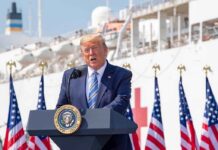
Trump said Iran “is dead,” then hours later ordered fresh U.S. strikes while talks with Tehran’s top leaders pressed on.
Story Snapshot
- Trump said talks reached Iran’s top leaders and he canceled planned strikes that night.
- He cast the campaign as massive and ongoing, with thousands of targets hit.
- Reuters and others reported pauses and resumed strikes amid push for opening Hormuz.
- Major outlets say Iran remained battered but standing, not collapsed.
What Trump Claimed And Why It Mattered
President Trump told the country that negotiations had gone to the highest level in Iran and that he canceled planned strikes because approval had been secured on key points. He also claimed the United States had struck more than 7,000 targets across Iran since the start of the conflict, a figure meant to signal scale and resolve. He framed the operation as ongoing pressure designed to force compliance, break Iran’s will to fight, and fast-track the opening of the Strait of Hormuz.
🇺🇸🇮🇷 TRUMP VOWS TO HIT IRAN “HARD”
“We’re going to hit them hard. There will be a response,” President Trump told Fox News, following Iran’s overnight missile attack on U.S. forces. pic.twitter.com/ftQJlfFNK0
— Belaaz News (@TheBelaaz) August 31, 2026
The messaging aimed to do two things at once. First, reassure Americans that the military held the upper hand. Second, push Tehran to concede without another wave of bombs. That is classic coercive diplomacy: threaten, strike, pause, talk, then threaten again if needed. Trump’s warning that Iran’s leadership would be wiped out if it backtracked underscored the stick behind the talks, and signaled belief that toppling the leadership was within reach if required.
What The Battlefield Picture Showed In Public
Public reporting captured a jagged rhythm of force and pause. Reuters reported that Iran and Israel halted attacks after Trump’s appeal, suggesting leverage at work but not a final end to conflict. Within weeks, Reuters also reported the United States hit Iran again, proving the pressure did not stop and that enforcement still required firepower. The White House narrative highlighted both the breadth of targets and the plan to reopen Hormuz to global shipping, which fits a strategy to starve Iran’s leverage at sea.
Supportive television commentary said U.S. forces destroyed Iranian naval and maritime assets at scale and kept a protected corridor moving ships through the Strait. A retired officer cited hundreds of Iranian vessels lost and thousands of small boats destroyed, along with damaged ports and infrastructure. That testimony bolstered the story of degraded Iranian capability, though it came from a media segment, not an official battle damage report, which limits its weight without further proof.
The Hard Question: Is Iran “Dead,” Or Just Hurt?
Several outlets argued Iran’s regime endured heavy blows yet kept standing. Reuters wrote that Iran emerged battered but intact, preserving its political core and leverage. The British Broadcasting Corporation reported that command systems still worked a month in, and that slain commanders were replaced from the same ideological ranks—resilience, not regime change. National Public Radio concluded that after six months, Iran’s leaders held power and even hardened their line rather than cracking.
Those claims challenge any idea of a clean, decisive victory by June. They do not deny damage. They contest the end state. For readers who value American conservative principles—peace through strength, clear goals, and honest scorekeeping—the test is simple: did pressure shift facts on the ground and bargaining power at the table? The record shows pressure worked at times, but not to total collapse. That does not make pressure wrong. It means finish lines must match results.
How To Read The Mixed Signals Without Getting Spun
Coercive air campaigns often overheat the narrative before the facts cool. Leaders speak fast to shape the enemy’s choices. Analysts speak later when damage is verified. The gap showed here. Trump claimed 7,000 plus targets struck and demanded Hormuz open now. Media accounts showed pauses, resumed strikes, and serious threats to leadership if talks failed. Other reports said the regime stayed upright, which points to pain inflicted but not a broken state.
#BREAKING Trump to Fox News: We are going to hit Iran hard. There will be a response. #Trump #KingStellaxWilliamEstLIVE
— Indian Development & Infra (@Defence1100) August 31, 2026
Practical takeaways stand out. First, pressure at scale gained time and bargaining space, as the temporary halt in Iran-Israel exchanges showed. Second, sealing Hormuz matters more than trading boasts; shipping lanes are leverage on real economies, not just headlines. Third, victory claims should track verifiable ends: open seas, fewer attacks, and a weaker enemy toolbox tomorrow than today. That is the conservative yardstick—results you can count, not slogans you can cheer.
Sources:
cnn.com, cnbc.com, bbc.com, reuters.com, en.wikipedia.org, jns.org, apnews.com, foxnews.com
© conservativehub.com 2026. All rights reserved.