

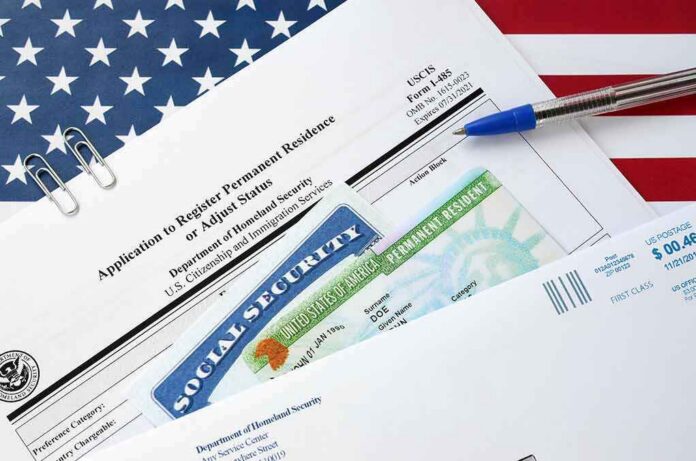
On September 18, a quiet rule change will let case officers decide far more green card outcomes than Congress ever spelled out — and that’s the point.
Story Snapshot
- DHS revived a broader “public charge” test for green cards starting September 18, 2026.
- The rule scraps the 2022 framework and restores officer-led, case-by-case judgments.
- Twenty-two states and major cities sued to block it before it takes effect.
- Backers say it promotes self-reliance; critics warn of a chilling effect on benefit use.
What changed and when it matters
The Department of Homeland Security published a final rule that restores a wider public charge test and rescinds the 2022 policy. The rule applies to applications filed on or after September 18, 2026. The agency says officers will make individualized, fact-specific decisions that review the total picture. That includes age, health, income, skills, and the applicant’s past and likely future use of government aid. The Department of Homeland Security framed this as a return to long-standing law with clearer enforcement teeth.
The phrase “public charge” goes back to 1882. Congress kept the term but left room for agencies to define it. That gap made swing after swing possible. One rule sets narrow limits; the next widens them; then lawsuits fly. The 2026 rule fits that cycle. It does not set a hard ban on any single benefit. It instead directs officers to weigh the “totality of the circumstances,” then decide if the person is likely to depend on public support in the future.
Why the lawsuits hit fast
A coalition of states, cities, and advocacy groups sued in federal court to stop the rule before the effective date. Their filings say the rule gives officers “wider discretion” to deny green cards and could count many kinds of benefits against applicants. They warn the policy could push families to drop health and food aid even when they qualify for it under the law. Some estimates say millions, including many children, could leave coverage due to fear and confusion.
State attorneys general argue the rule reaches beyond Congress’s intent and invites uneven results. They say it empowers individual officers to treat programs like Medicaid or food aid as major negatives, even for brief or lawful use. News coverage and court complaints frame this as “sweeping discretion” that could block paths to lawful status. The heart of the legal fight is who should draw the line on self-sufficiency: Congress by statute or agencies by standards and guidance.
How the standard works in practice
Under the rule, officers must review each case on its own facts. There is no one-score test or automatic fail. They can consider income level, a signed financial sponsor, the applicant’s age and health, education and job history, and any use of means-tested programs. The Department of Homeland Security stresses judgment over checklists. That sounds simple, but it shifts power from rigid definitions to trained officers who must call tough balls and strikes on future risk.
"While ICE raids dominate headlines, another important move on immigration policy has received far less attention: the Trump administration restoring the teeth to the public charge doctrine, a long-standing part of American immigration law." – @PeterMVanBuren pic.twitter.com/r6VGBe1fZ9
— The American Conservative (@amconmag) September 28, 2026
Supporters say this keeps faith with common sense. A nation that welcomes immigrants also expects newcomers to carry their share. That view holds that bright lines invite gaming and that households living on public aid should not gain an edge in the line. A flexible, fact-based test better protects taxpayers and the safety net. It also rewards skills, work history, and savings, which reflect the American ladder of merit and responsibility.
What to watch next
Courts will decide whether the rule starts on schedule or pauses for review. Agencies will rush to train officers and publish clear examples. Applicants and sponsors will ask what counts most: steady work, private insurance, or cash on hand. City and state leaders will track disenrollment from clinics and food programs. Congress could step in, but history says this fight will likely ping-pong between rules, guidance, and court orders before it settles again — if it ever does.
Sources:
theamericanconservative.com, govinfo.gov, ag.state.mn.us, oag.ca.gov, theguardian.com, reuters.com, riag.ri.gov, usatoday.com, mass.gov, politico.com, yalelawjournal.org
© conservativehub.com 2026. All rights reserved.