

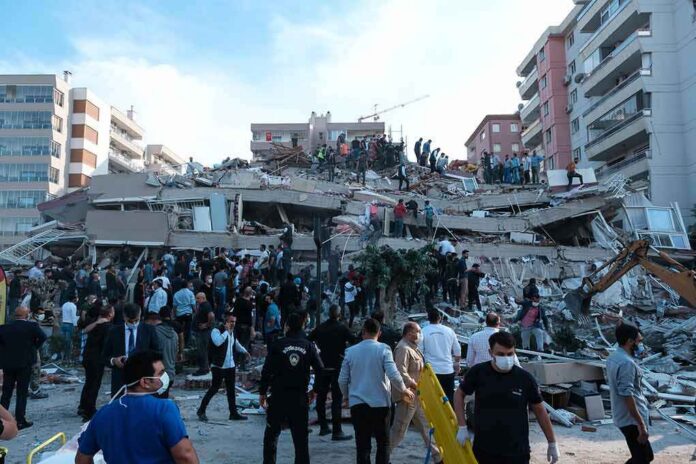
The camera catches the flash first, then chaos pours into a quiet Kharkiv street.
Story Snapshot
- Surveillance video shows a strike slamming a residential street and grocery store in Kharkiv.
- Officials report multiple civilian deaths and injuries, including children, after the blast.
- Local leaders say a guided aerial bomb hit the Nemyshlianskyi district on October 11.
- United Nations tracking shows a wider surge in civilian harm from aerial bombs in 2025.
What the footage shows and what officials reported
Closed-circuit video from Kharkiv records the moment a blast tears through a residential street. The strike hits near a grocery store. Flames and debris fill the frame within seconds. Ukrainian officials say the attack killed several people and injured many more, including children. The scene shows typical signs of an urban blast: broken facades, cars ablaze, and bystanders running for cover. The video and early casualty counts come from named outlets and local authorities on the day of the event.
Kharkiv’s mayor and regional officials described a guided aerial bomb strike in the Nemyshlianskyi district on October 11. They reported a woman killed and at least ten civilians injured, including a child. These statements align with the street-level damage pattern seen in the video: a focused impact with widespread shrapnel and fire. The location is residential, with small shops and apartments packed close, where any explosive blast risks high civilian tolls.
How this fits a known pattern of urban harm
United Nations monitors documented a sharp rise in civilian casualties linked to aerial bombs in mid-2025. July saw more than double the aerial-bomb casualties than June. Long-range weapons in urban areas caused most June casualties. Kharkiv was repeatedly listed among the hardest hit regions during that period. The strike captured on camera fits that broader trend: heavy munitions used in dense neighborhoods produce deadly, predictable effects on civilians.
Independent rights groups reported repeated bombardments of Kharkiv’s residential areas across multiple months. Their findings describe attacks that killed and injured hundreds of civilians and may violate core laws of war. These assessments stress proportionality and precautions as legal duties. When munitions land in streets lined with homes and shops, the risk to civilians is not a surprise; it is baked into the choice of weapon and the place it lands.
Why the details matter to civilian protection and common sense
Video of the moment of impact strips away spin. The blast does not land at a base or checkpoint. It slams a street where people buy bread and wait by cars. Common sense says this is not how you protect noncombatants. American conservative values prize clear lines, personal responsibility, and restraint with force. When a strike kills shoppers and children on an ordinary street, those lines look crossed in plain view.
NEW FOOTAGE
The evening quiet in a residential suburb outside Kharkiv was shattered when a Russian missile strike directly hit a local grocery store and surrounding neighborhood streets. Newly released surveillance footage captures the harrowing final moments before the blast,…
— Satguy 141 (@satguy01) October 12, 2026
Officials will debate target intent and weapon choice in the days ahead. That process belongs in courts and councils. Yet the facts that drive moral judgment are on the tape and in the casualty lists. A guided bomb in a neighborhood is a choice with known costs. Law and decency both demand efforts to avoid civilian harm. When those efforts fail—or are ignored—families, not fighters, pay the price.
What comes next on the ground
Kharkiv’s emergency crews will dig out rubble, douse fires, and tally damage. Families will line up for aid, repairs, and funerals. Local leaders will push for better shelters and more air defenses. International monitors will log the event in another grim spreadsheet line—date, place, weapon, dead, injured. The pattern will only break when strikes stop hitting city blocks or when defenders can reliably stop the bombs before they fall.
Why this incident will not be an outlier without change
Urban warfare rewards precision and punishes error, yet aerial bombs scatter harm far beyond a single doorway. The wider record in Ukraine shows how often these weapons seed tragedy in towns and cities. The Kharkiv footage is one scene in a long reel. If combatants keep using heavy munitions in dense areas, the math stays cruel and steady: more blasts, more names, more candles in windows. Policy, training, and accountability must move faster than the next siren.
Sources:
facebook.com, aljazeera.com, kyivpost.com, reuters.com, kyivindependent.com, understandingwar.org
© conservativehub.com 2026. All rights reserved.