
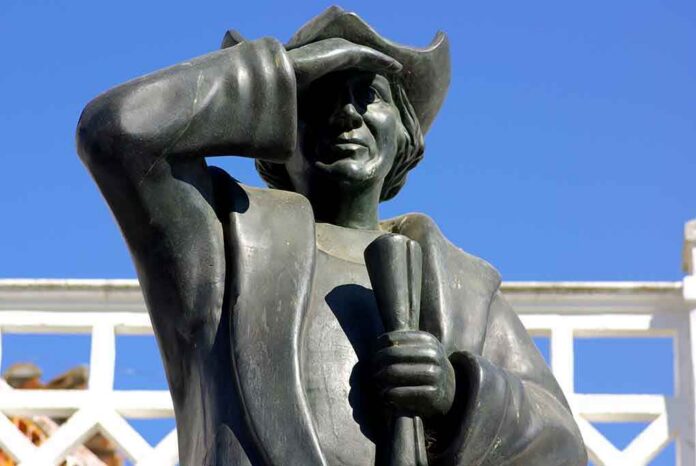
President Trump put a Christopher Columbus statue back on display at the White House, calling the explorer a hero whose voyage built the “greatest, freest, and most just Nation in history.”
Quick Take
- The White House issued a formal proclamation declaring October 12, 2026, as Columbus Day and ordered flags displayed in his honor.
- President Trump says Columbus deserves renewed national recognition after years of statue removals he blames on the radical left.
- Critics, including Indigenous rights activists and some Democratic lawmakers, argue Columbus represents violence and colonization, not heroism.
- The fight echoes a decade-long national argument over whether Columbus Day should become Indigenous Peoples Day.
A Presidential Proclamation Brings Columbus Back to the National Stage
The White House released a proclamation titled “Columbus Day, 2026” on October 7, 2026. It calls Columbus “a legend whose vision, fortitude, and perseverance unleashed a dynamic of history” that led to America’s founding. The document directs flags to fly on public buildings in his honor and sets October 12 as the official day of recognition. It marks one of the clearest presidential statements defending Columbus in years.
President Trump paired the proclamation with a physical statement. A Columbus statue now stands on White House grounds, a direct response to years of cities removing similar monuments from parks and public squares. Supporters see it as restoring a piece of American heritage. Trump framed the move as pushback against what he calls the left’s years-long “plunder” of American symbols and history.
Why Columbus Still Divides the Country
Opposition to the Columbus statue comes from Indigenous advocates who say the honor ignores real suffering. Activist Jackson Meredith called it “patently absurd” to honor Indigenous people and Columbus in the same breath, arguing his arrival brought violence and disease to people already living here. Indigenous rights activist Mahtowin Munro has said celebrating Columbus “erases us” and amounts to celebrating genocide.
The debate has played out in city after city. In Providence, Rhode Island, protesters called a restored Columbus statue “tone deaf,” saying it reversed progress made when the monument was removed years earlier. A Senate candidate who is Black and Native American recently criticized Trump’s Columbus revival directly, saying “it’s still Indigenous Peoples’ Day” regardless of federal proclamations. These are not fringe objections; they reflect a real and organized movement that has removed dozens of Columbus monuments since 2020.
A Fight That Is Really About American Identity
This argument rarely changes minds because it was never purely about fifteenth-century navigation. Columbus Day became a point of pride for Italian Americans after the 1891 lynching of eleven Italian immigrants in New Orleans, giving the holiday deep roots in immigrant identity and belonging. Indigenous communities view the same date as marking the start of conquest and loss. Both sides are defending something real; they simply disagree on what the day actually represents.
Monument fights like this one have become a regular feature of American politics. Researchers tracking the Toppled Monuments Archive counted 84 removals of colonial-era statues across North America since 2020. Columbus statues were common targets alongside Confederate memorials, which fuels the sense among conservatives that a broader campaign is erasing historical figures rather than debating them fairly. Restoring the statue sends a clear signal that this erasure will not go unanswered.
What Comes Next for the Holiday and the Statue
Expect this fight to continue well past October 12. Cities will keep deciding individually whether to call it Columbus Day or Indigenous Peoples Day, and federal recognition does not force local governments to follow suit. The White House statue, though, gives supporters a concrete symbol to rally around. For a president who has made cultural battles over history and monuments a signature issue, Columbus now stands literally on his front lawn.
TRUMP DECLARES COLUMBUS DAY COMEBACK, CELEBRATES ITALIAN AMERICAN HERITAGE AND TAKES AIM AT LEFT-WING ACTIVISTS WHO TORE DOWN HISTORIC MONUMENTS.
WASHINGTON — President Donald Trump marked Columbus Day weekend with a strong defense of Italian American heritage and a sharp rebuke…
— MDBayNews (@MDBayNews) October 11, 2026
Whether this settles the Columbus Day argument or simply gives it new fuel remains to be seen. What is clear is that the administration views restoring Columbus’s image as part of a larger effort to push back against monument removals nationwide. Critics will keep pointing to the history of colonization. Supporters will keep pointing to the statue now standing at the nation’s most famous address.
Sources:
thegatewaypundit.com, loc.gov, learninglink.oup.com, sourcebooks.web.fordham.edu, archive.org, inquirer.com, nbcbayarea.com
© conservativehub.com 2026. All rights reserved.