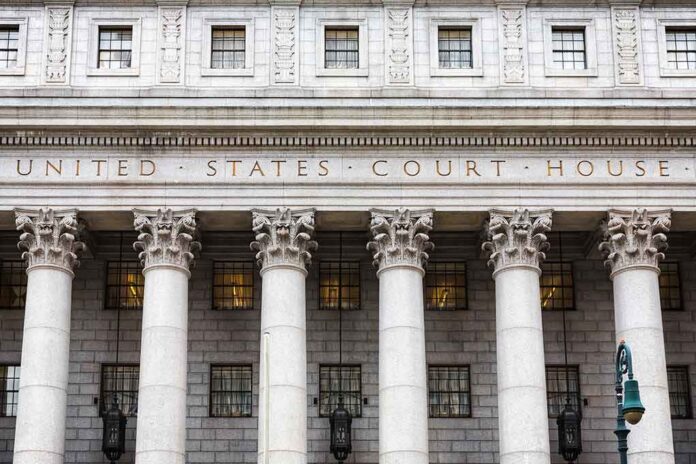
Every federal judge in Middle Tennessee stepped off Senator Marsha Blackburn’s lawsuit, and now an outside judge will take it.
Story Snapshot
- Blackburn sued Jack Smith over a subpoena for her phone records tied to Arctic Frost.
- Her claims cite the Speech or Debate Clause and challenge Smith’s appointment as unlawful.
- The entire Middle District of Tennessee bench recused, triggering outside assignment.
- The Sixth Circuit will designate a judge from another district to handle the case.
What Forced A Rare Bench-Wide Reset
Chief Judge William L. Campbell Jr. said all district judges in the Middle District of Tennessee recused from Blackburn’s suit. He explained the case will be reassigned once the United States Court of Appeals for the Sixth Circuit designates an outside judge. Law360 reported earlier that an initially assigned judge stepped aside before the broader recusal was announced. The orders did not state why each judge recused. That silence is common when conflict details are confidential or widespread.
Federal recusal rules aim to protect trust, not to pick sides. Judges must step away if fairness might reasonably be doubted. Entire benches sometimes recuse when many judges share a conflict or when the court itself is entangled. The reassignment path through the Sixth Circuit is built for that need. It prevents forum paralysis and keeps the merits on track, even when the home courthouse cannot hear the case.
Blackburn’s Core Claims Against Smith
Blackburn filed in the Middle District of Tennessee on September 30, 2026. She alleged Jack Smith subpoenaed her cell phone toll records during the Arctic Frost probe and violated the Constitution. Her filing argues the Speech or Debate Clause shields legislative materials from forced disclosure. She also claims First and Fourth Amendment violations because she lacked notice and a fair chance to fight the records seizure. These are allegations at the pleading stage, not findings by a court.
The complaint further seeks a ruling that Smith’s appointment as special counsel was unlawful under the Appointments Clause. Reports say she asked the court to declare his appointment invalid and to hold him to account for abuses of power. The case targets conduct during a high-stakes investigation, which heightens the separation-of-powers stakes if the appointment claim lands. That theory could reshape the remedy, the scope of discovery, and Smith’s personal exposure.
What The Recusal Does And Does Not Mean
The mass recusal shows the local court cannot sit, not that Blackburn is right or wrong on the law. Recusal screens out doubt about neutrality. It does not decide facts, prove bias, or validate claims. The Sixth Circuit designation ensures a judge with no local conflict leads the case. That step is healthy process, especially where political figures, sealed tools, and legislative privilege all mix in one lawsuit.
The basis for each recusal remains undisclosed in public reporting. That is normal and wise when reasons risk revealing confidential ties or ongoing matters. Conservative readers often ask if silence hides the ball. Here, the better read is that the system followed the rule book to avoid any cloud. A clean judge protects both sides and keeps the focus on evidence and law, not courthouse gossip.
The Legal Battlegrounds To Watch Next
The outside judge will likely start with threshold fights. Expect arguments on standing, immunity, and whether courts can review parts of grand-jury-adjacent process. The Speech or Debate Clause claim turns on whether the subpoena touched true legislative work or only call-detail records. The Appointments Clause challenge will draw heavy briefing, as courts weigh past special counsel rulings and the executive’s power to appoint and direct prosecutors.
Discovery could test how deep the court will dig into sealed steps, non-disclosure orders, and carrier returns. Reports say Blackburn seeks nominal damages and accountability, not a payout. That framing keeps attention on principles: limits on federal power, respect for the Constitution, and fair process for elected representatives. Those aims line up with common-sense conservative values. If the facts back her claims, the ruling could set boundaries that outlast any one investigation.
Sources:
thegatewaypundit.com, law360.com, redstate.com, law360.co.uk, x.com, nytimes.com, thefederalist.com
© conservativehub.com 2026. All rights reserved.