

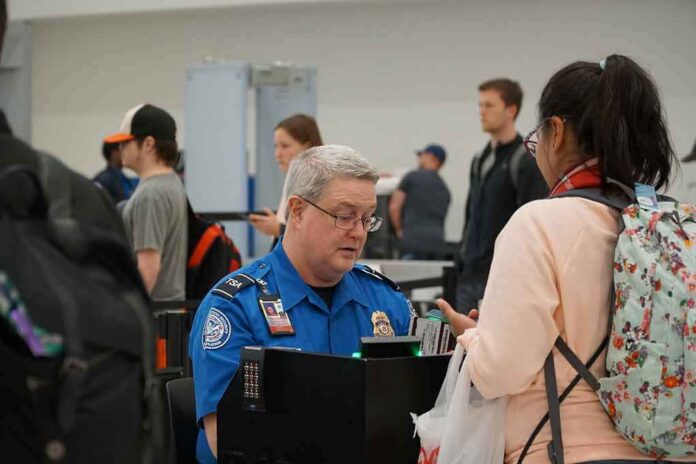
The FBI arrested a 34-year-old California realtor at Los Angeles International Airport as she tried to board a flight to Shanghai, after agents say she surveilled the Taiwanese president’s family for China.
Story Snapshot
- Agents arrested Wanying “Heather” Zhang at Los Angeles International Airport on a federal complaint.
- Prosecutors say she acted as an unregistered agent for the People’s Republic of China.
- The complaint ties her to surveillance of the Taiwanese president’s son and family in the United States.
- The case fits a rising pattern of transnational repression and influence operations.
Arrest At The Jetway And The Core Charge
Federal agents moved on Sunday. They took Wanying “Heather” Zhang into custody at Los Angeles International Airport before she could board a flight to Shanghai. Prosecutors charged Zhang with acting as an unregistered agent of the People’s Republic of China. The charge does not allege classic espionage. It alleges she worked at the direction or control of a foreign government without notifying the United States Department of Justice as the law requires.
First Assistant United States Attorney Bill Essayli said the case flows from a federal complaint. That complaint, filed by a member of the Federal Bureau of Investigation’s counterintelligence squad, outlines travel, communications, and alleged surveillance. The filing anchors the arrest and sets the stage for a likely indictment. Zhang will have the right to contest the claims in court. For now, prosecutors say the facts support the unregistered agent charge.
What Prosecutors Say She Did
The government’s filing describes activity that targeted a sensitive figure. Agents say Zhang surveilled the family of Taiwan’s president, including his son, while they were in the United States. The complaint points to trips, photos, and license plate captures near a family residence to show intent and direction. Prosecutors link that work to officials from the People’s Republic of China. This is the core of the foreign-agent allegation, not a side note.
Federal filings in such cases often focus on the paper trail. Travel records, messages, and tasking instructions are common pillars. Media reports say the complaint fits that mold here as well. The focus is not only who she watched but why she did it and for whom. The question the law asks is simple: did she act at the direction of a foreign power while hiding that tie from the United States government.
Why This Case Hits A Nerve
This arrest lands in the middle of an intensifying contest between China and Taiwan. Taiwan’s government has warned for years that Chinese services recruit assets to watch, pressure, or exploit people across borders. Courts in Taiwan have convicted current and former officers for spying for China. United States media and officials have also flagged a rise in transnational repression tactics designed to track and intimidate targets abroad.
American conservative values put sovereignty, law and order, and the safety of families first. A foreign service sending tasks into our neighborhoods crosses a bright line. If the government proves its case, this is not politics. It is a hard national security problem. The right answer is firm enforcement of the law, real costs for foreign intelligence services, and protection for people who came here to live and work without fear.
The Law At Work And What Comes Next
The foreign-agent statute is blunt on purpose. You must disclose if you take direction from a foreign government inside the United States. The rule does not ban speech or travel; it demands daylight. When people hide that tie, it becomes a crime. That transparency standard lets the United States see influence as it happens and disrupt foreign control before it turns into coercion or harm.
FEDS ARREST ALLEGED CHINESE FOREIGN AGENT AT LAX
First Assistant U.S. Attorney Bill Essayli says Wanying “Heather” Zhang was arrested while attempting to leave for China—accused of surveilling a Taiwanese official’s relative at the direction of PRC officials. https://t.co/DVGbW0iArQ
— Real America's Voice (RAV) (@RealAmVoice) October 4, 2026
The next steps will move fast. A detention hearing will decide if Zhang waits in custody. A grand jury will decide whether to indict. Prosecutors will decide whether to add counts tied to stalking, surveillance, or conspiracy. Defense counsel will test the evidence and the claimed links to Chinese officials. A complaint is not a conviction, but the arrest tells you this: federal agents believe they have enough to protect a high-risk family and to send a message.
Sources:
thegatewaypundit.com, nbclosangeles.com, time.com, cbsnews.com, aa.com.tr
© conservativehub.com 2026. All rights reserved.