

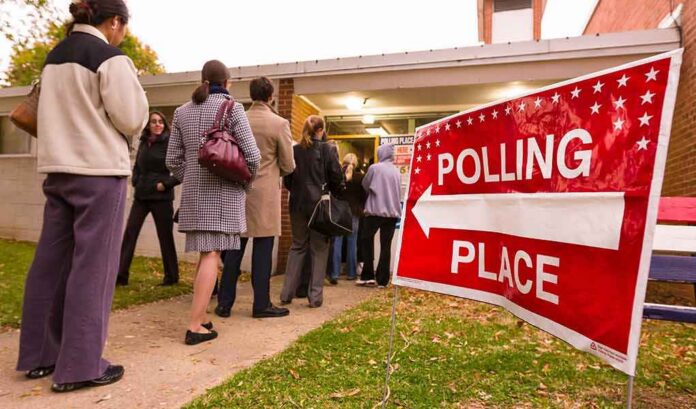
Rasmussen Reports says Hispanic voters now prefer Republicans over Democrats by 50% to 42% on the generic congressional ballot.
Story Snapshot
- Rasmussen’s latest ballot shows a Republican edge among Hispanic voters, 50%-42%.
- The finding clashes with other recent polls that show Democrats leading with Hispanics.
- Public safety, border control, and cost of living drive Hispanic priorities across parties.
- Small subgroup samples can swing fast, so trends need repeated confirmation.
Rasmussen’s Topline: GOP Leads With Hispanic Voters
Rasmussen Reports’ generic congressional ballot lists Hispanic voters at 50% for Republicans and 42% for Democrats. The split puts Republicans ahead with a group that often decides close races in states like Arizona, Nevada, and Texas. The same release shows Republicans leading whites and trailing black voters, aligning with long-running patterns. The immediate political read is simple: if this margin holds, several House seats in majority-minority districts become more competitive and statewide contests tighten.
The mechanics of a generic ballot matter. Voters respond to party labels, not named candidates. That strips personality and name recognition from the choice and highlights party brand strength. A Republican lead with Hispanics under that test implies traction on broad themes. The issues most likely behind movement are public safety, border security, and inflation. When voters feel unsafe or squeezed, they punish the party they see as running the place. That is politics 101, and both parties know it.
Clash With Other Polls: A Fast-Moving Electorate
Other recent surveys point the other way. An NBC News and Telemundo poll found Democrats with a strong lead among Latino voters this fall, citing economic concerns but also long-term Republican gains since 2020. The divergence is not rare with fast-moving subgroups. Different samples, modes, and question wording produce different snapshots. The safe conclusion is not that one poll “wins,” but that Hispanic voters remain fluid and open to persuasion deep into the cycle.
Practical campaigns do not wait for perfect consensus. They test the argument that works with real people. When crime rises or migrant surges strain housing and schools, the side promising order and a clear plan tends to gain. If Democrats answer with credible plans on cost of living and community safety, they can blunt that edge. If Republicans pair border enforcement with work visas and legal pathways that respect law and family, they can grow it. Policy beats vibes when the rent is due.
What The Numbers Mean For Strategy
A Republican edge with Hispanic voters would reshape key battleground maps. South Texas districts that swung right in 2024 could lock in. Suburbs around Phoenix and Las Vegas would see tighter margins. Miami-Dade would stay competitive. Republicans would stress safe streets, a secure border that is also humane, and lower everyday costs. Democrats would push lower drug prices, wage growth, and a plan to manage the border without chaos. The side that talks kitchen-table tradeoffs in plain English will win the late deciders.
Both parties must treat Hispanic voters as a coalition, not a monolith. Cuban Americans in Florida, Mexican Americans in Texas and the Southwest, Puerto Ricans in Orlando, and Central Americans in Northern Virginia weigh issues differently. Faith, small business ownership, union ties, and military service also shape views. A one-size message fails. Local messengers who speak to safety, work, faith, and family beat national slogans every time. Respect and specifics are not optional; they are the whole game.
Why Subgroup Polling Swings So Much
Small subgroup samples carry wider error bands and bounce more from week to week. Many pollsters warn against heavy claims from small cuts of national surveys because the margin of error grows fast as the sample shrinks. That does not void the Rasmussen finding; it sets a caution flag. Campaigns should watch for repetition across polls and over time. If multiple credible surveys show the same pattern for several weeks, it is real enough to bet time and money on it.
"The image displays polling data for a generic congressional ballot among Hispanic voters, showing Rasmussen Poll figures with Republicans at 50% and Democrats at 42%.
Polling Context• According to the Rasmussen Poll data featured in the image, Hispanic voter preference on the…
— Neal Rudin (@ZagoZana) October 5, 2026
Common sense and conservative values line up with what many Hispanic families say they want: safe neighborhoods, a lawful and orderly border, work that pays, and schools that teach basics. If Republicans keep the focus on those goals and pair enforcement with fairness, they can earn durable gains. If Democrats show clear, measurable plans on safety and costs, they can hold much of the vote. The message discipline and policy clarity in the next month will decide who owns this swing.
Sources:
thegatewaypundit.com, citizenfreepress.com, rasmussenreports.com
© conservativehub.com 2026. All rights reserved.